The Education Industry Is a Stage Play
19 min readThe Education Industry Is a Stage Play
To Our Dear Investors
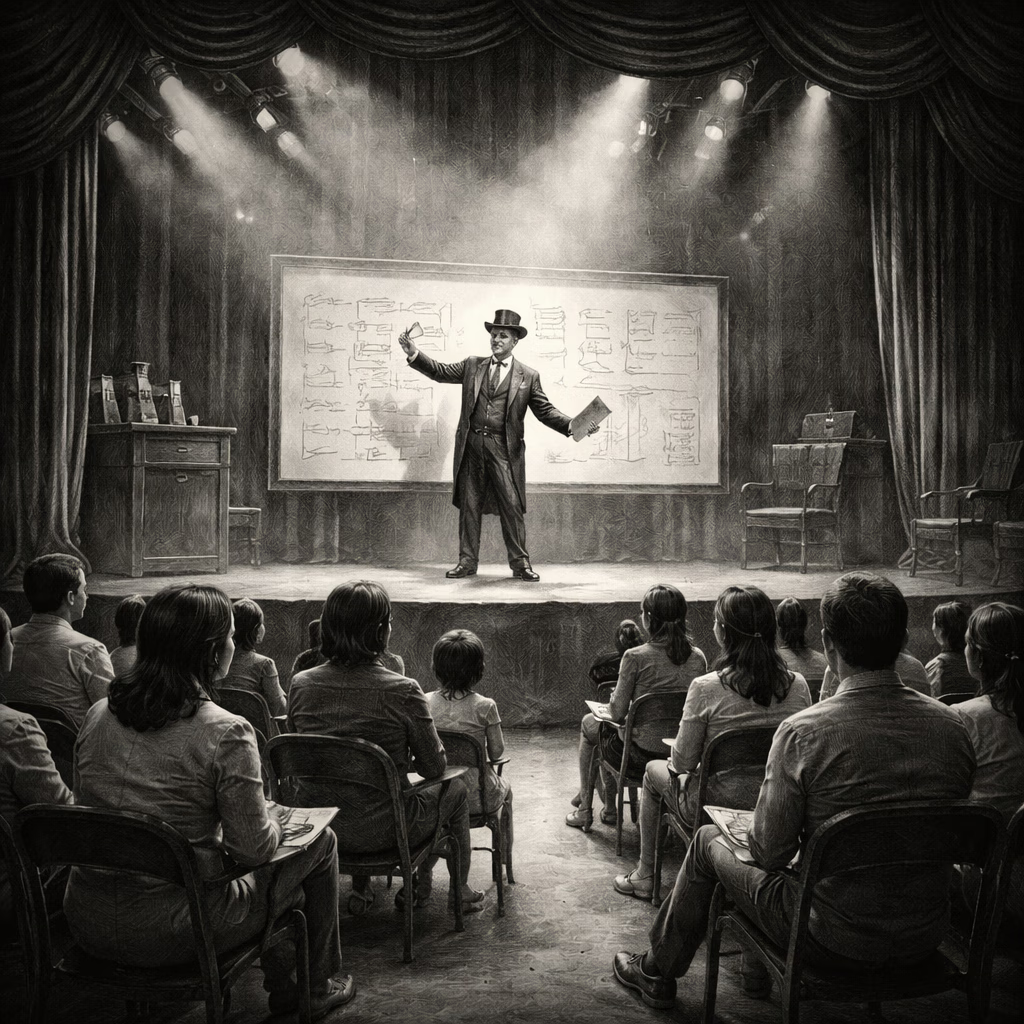
Good evening, investors.
Before we begin, please don’t rush into your sentimental mode. We’ve got sentiment too—printed on the wall, baked into the deck, paired with a warm lamp—just enough for you to snap a photo and post it with a caption like “Doing something for the next generation.” The likes will rise faster than anything on the financial statements.
You’re here to look at a business: cash flow, renewals, referrals, acquisition cost, regulatory winds. That’s what we should be talking about tonight, isn’t it?
Rather than saying I run an education company, think of it as a theater. A theater doesn’t sell truth; it sells experience. It doesn’t sell the destination; it sells the next stop. It doesn’t sell solutions; it sells the act of solving.
The magic of education as a business is this: it comes with a built-in moral immunity card. As long as you stand in the spotlight of “for the children,” even if you’re counting money in the dark, the audience will still applaud for you.
Our theater logic is simple:
Parents enter with their kids → we operate them backstage into characters → we send them home with souvenirs they can post.
And I can say this responsibly: our core competitive advantage is that we do not output grades, competence, pathways, or futures.
So please, dear investors, stop pretending you’re attending your first parent-teacher meeting.
What we truly output is something parents are willing to pay for again—then drag others in to pay twice.
The show must tour for the theater to profit; anxiety must be refilled for the register to glow. Hahahaha.
Set Design
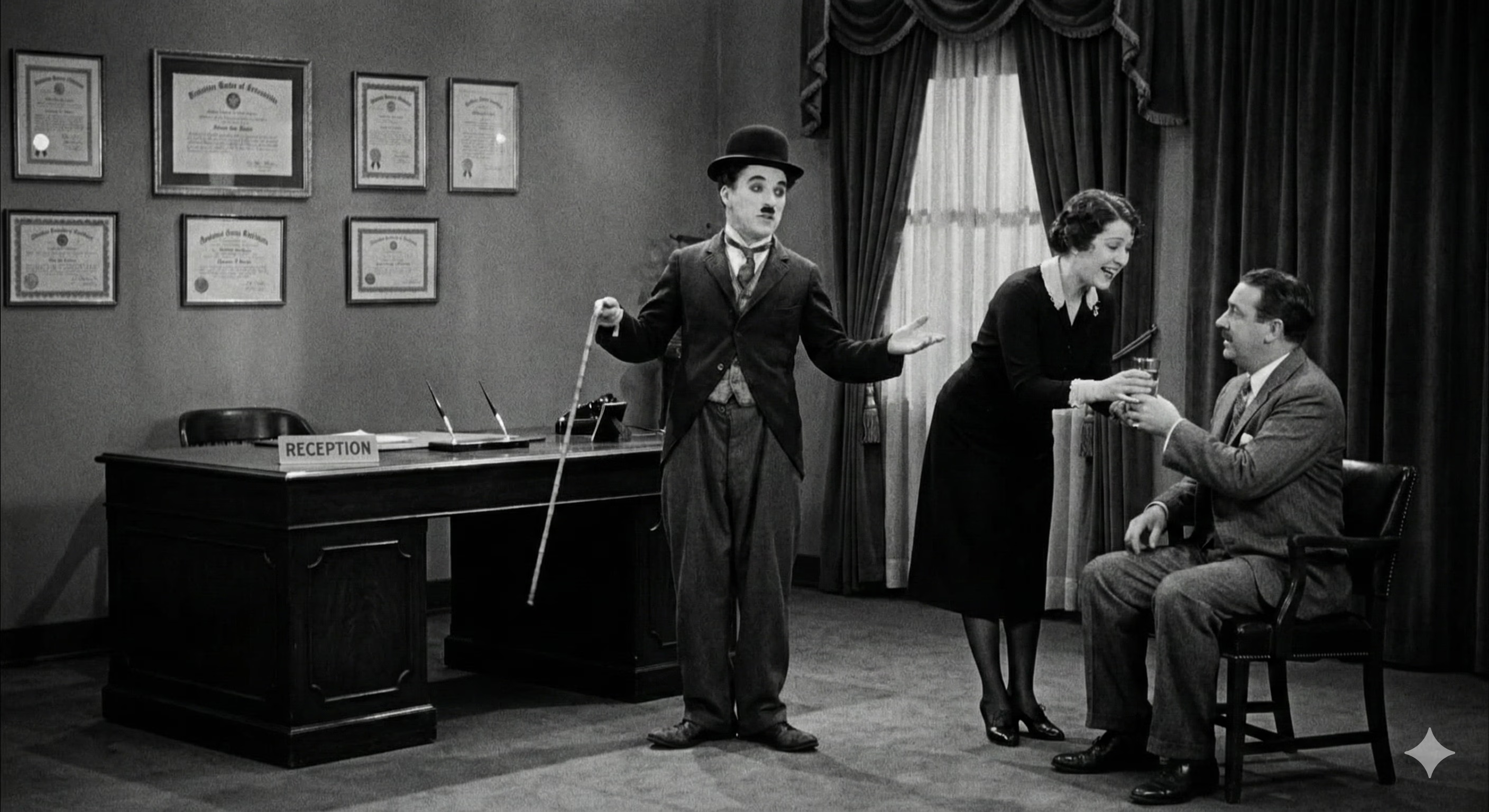
Relax. We won’t rush into harvesting.
Harvesting is crude; it spooks the prey. Chinese parents are highly vigilant—yet they only impulse-buy two things: fear and scarcity.
We’ll keep the opening clean and bright, the kind of place that looks like “handing your child’s future to this won’t make you panic.”
The front desk offers warm water. Warm water is so damn crucial: it carries the essence of our culture—once you’ve taken the water, you’re obliged to sit and hear the whole thing.
The prop team will prep some high-reflectance trophies and certificates. To save costs, we won’t bother printing the words on them—under strong lights, nobody can tell. A certificate is evidence. The shinier the evidence, the cheaper the conscience.
Then it’s the standard sequence: assessment, interview, planning, trial class, feedback, phase review, home-school collaboration. Our ragtag troupe has been with me from the start. They know the choreography.
Do these processes actually produce educational results?”
Excellent question, investor. That means you’re starting to get into character.
Of course we care about “results”—but not educational results. Purchase results. The assessment report is our best prop: it wrings anxiety out of the air and twists it into paper. Once anxiety exists as a sheet of paper, people are willing to pay.
It also lets parents explain—at banquets, in family group chats, on Moments—with a rational, scientific, responsible posture, why they’re tiger-parenting and how successful they are at it. That sets up our blood supply nicely.
After all, in this era, only what can be displayed counts as having happened.
Costume Change
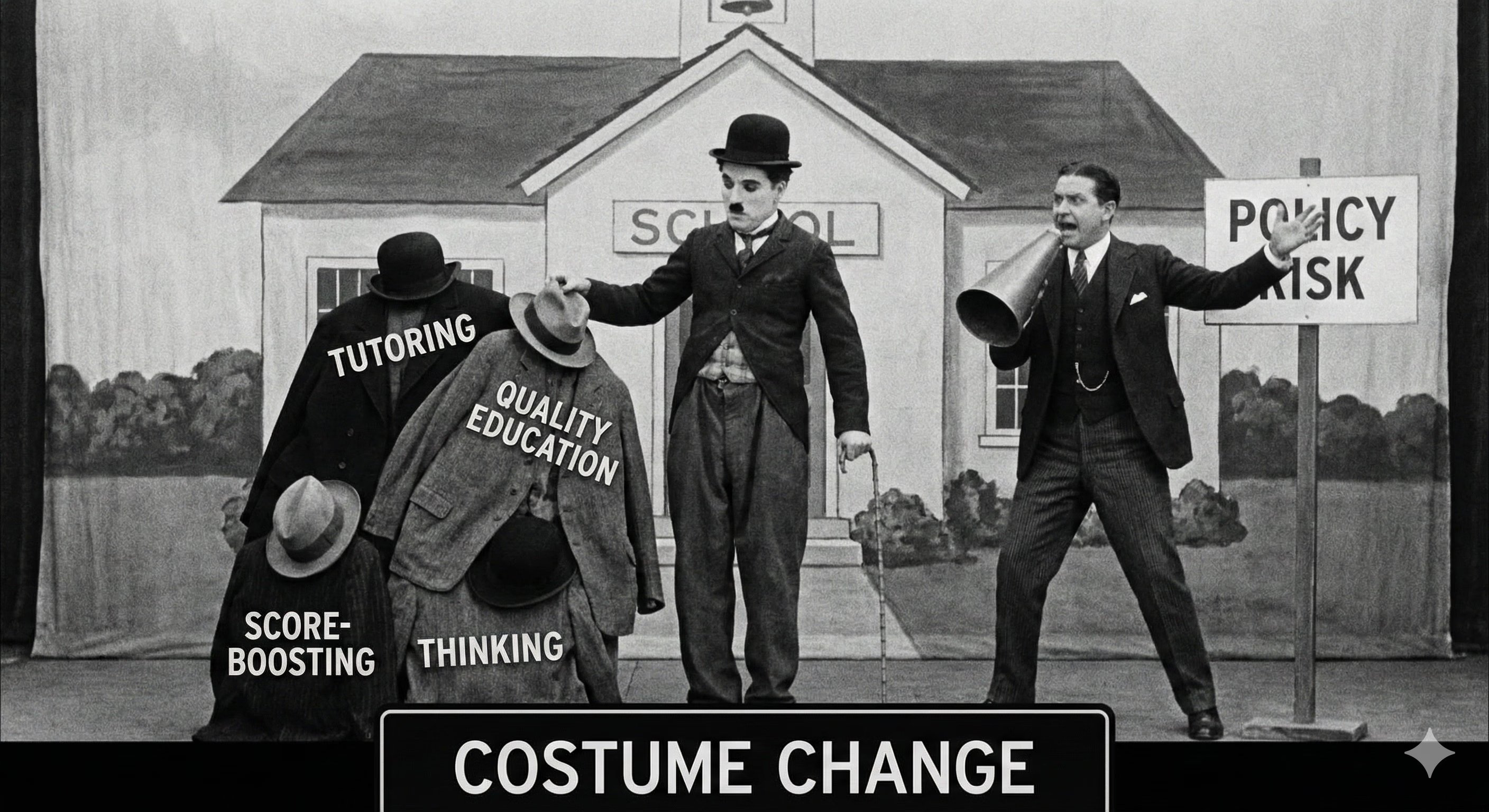
I know you veterans are already thinking about policy risk. To me, Double Reduction was never a knife—it was the lighting crew reminding us: this scene can’t be played this way anymore. Change costumes and keep going.
We have ready-made tutoring costumes and “quality education” costumes.
Score-boosting costumes and competency costumes.
Drilling costumes and “thinking” costumes.
Academic costumes and non-academic costumes.
Our aesthetics consultant is confident: no matter which costume we put on, the script continues smoothly.
Orderliness, a sense of being ahead, peer-pressure anesthesia, and proof of “I’m not falling behind.” That’s the substrate of our script.
We are extremely compliant.
We never say “guarantee.” We say “system.”
We never say “raise scores.” We say “enhance learning capacity.”
We never say “cram.” We say “phase transition” and “leap.”
Casting
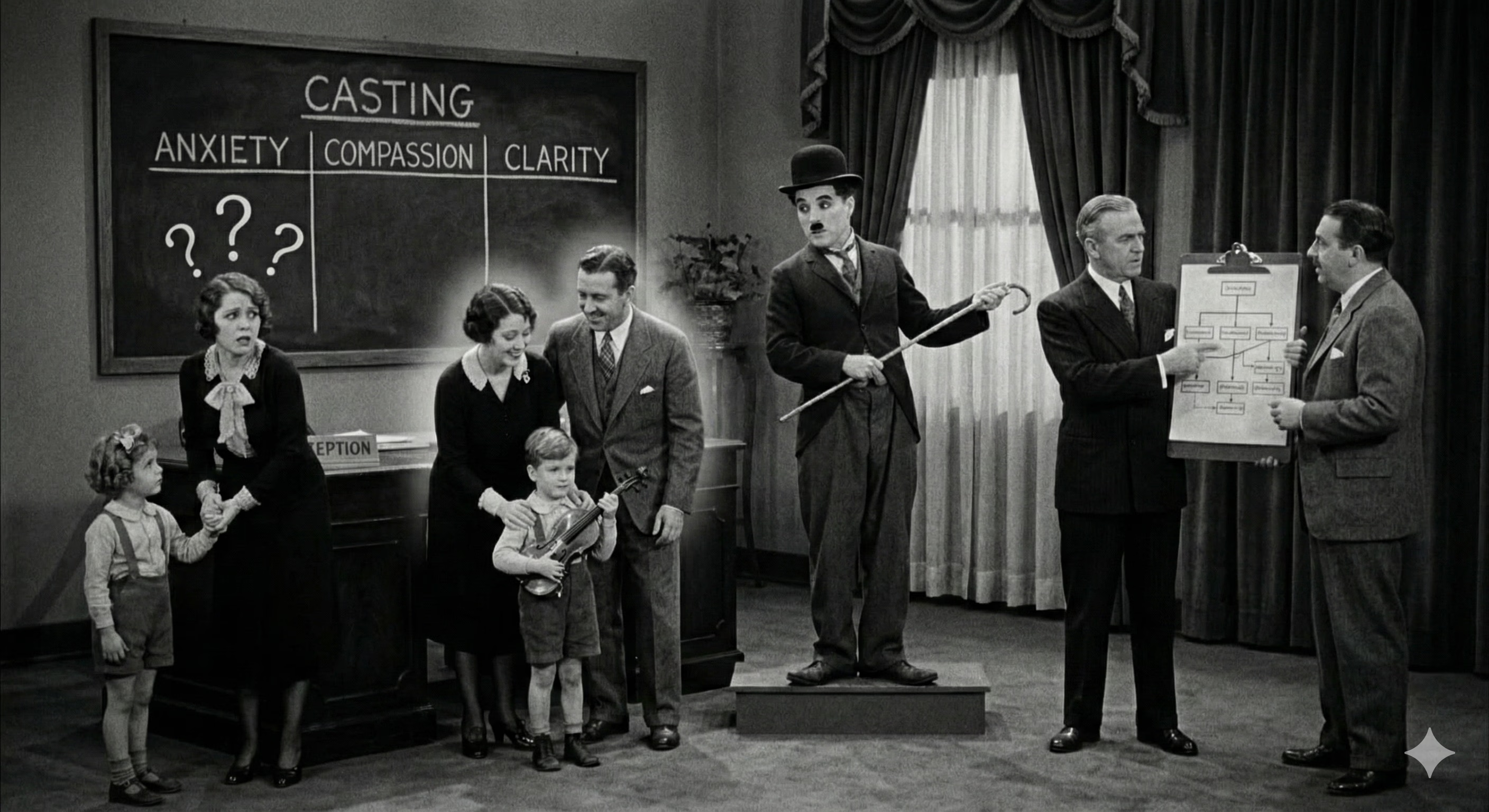
Our audience falls into three main groups. I prefer to call them “roles,” because roles are more stable than people.
Type One: Anxiety.
Tracked down by middle-school streaming, the gaokao single-plank bridge, 985/211, Double First-Class, civil-service posts, household registration, school district housing, and “other people’s children.” The ones who’ve been chased by these “things” until they drop the thread. They usually bring their kids in voluntarily.
Type Two: Mercy.
Mercy Type A is rational—builds boundaries with the child and respects them. Mercy Type B is emotional—commonly known as indulgent. Their shared trait: if the kid says it’s fine, it’s fine. So they usually enter our theater because the child displays an interest or talent.
Type Three: Sigma.
Clear goals, did the homework, wants paths, resources, circles, fellow travelers. They come because they need to confirm the craving: my choice is the correct one.
The Anxiety Type
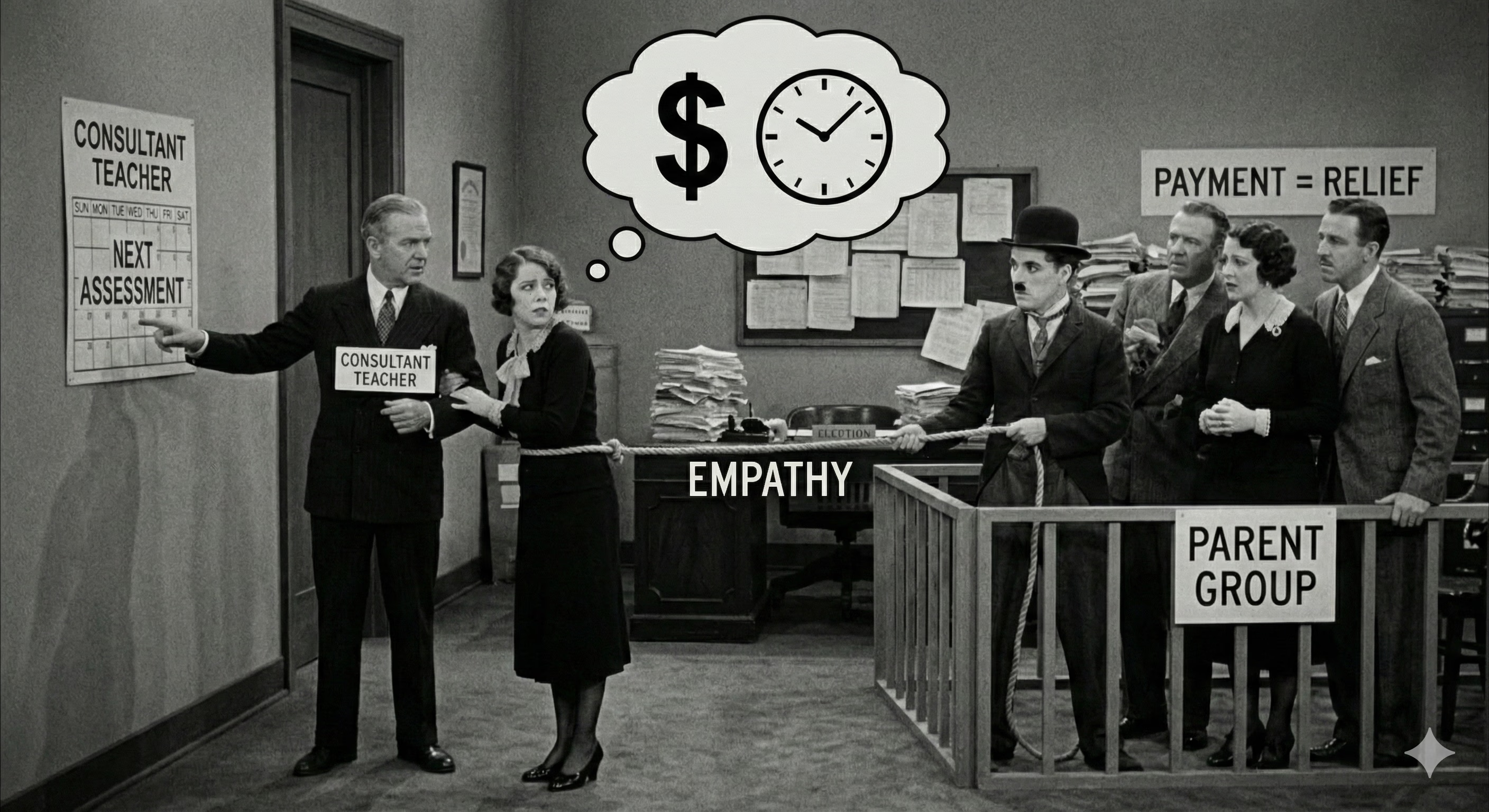
The Anxiety Type is easiest to domesticate. The moment they walk in, they already have a line in their head: “If I don’t do something now, it’ll be too late.”
I’ll assign an actor—sorry, a “consultant teacher.”
Their most important skill isn’t pedagogy. It’s validation.
Validate your pressure points, like rummaging through drawers in your mind:
You fear falling behind? Missing the window? Being streamed?
You fear competition quotas? Lack of resources? Choosing wrong?
You fear others are grinding in secret?
Validation creates a kind of pleasure: you think you’ve been understood.
Being understood is a painkiller. Painkillers make people sign.
Step two is the “ensemble scene.”
Anxious people fear being alone, so we provide their tribe:
Parent groups, check-in groups, competition groups, admissions groups, KOL groups.
Once they’re in the group, anxiety stops being an individual pain and becomes a collective religion. The beauty of religion is: you just follow; you don’t have to think.
Step three is the core: never let relief touch the ground.
At the moment they pay, the phone goes ding, and the brain blanks for a second—like salvation. Our job is to make them remember that blank second and believe the next one will blank even more.
So every “answer that could truly end anxiety” is always postponed to the next act: the next assessment, the next phase summary, the next sprint, the next masterclass, the next more suitable track, the next scarcer seat.
So what does the child actually learn in class?”
How did I end up with this group of investors? What the child learns isn’t important. What matters is what the parents hear.
At precisely the right moment, we’ll tell them: “Let the child explore—don’t worry. LET IT GO~”
Hahahaha. Beautiful, isn’t it? They don’t realize the child is talking about them. And we don’t need to care what their actual child is doing inside our theater.
The Mercy Type
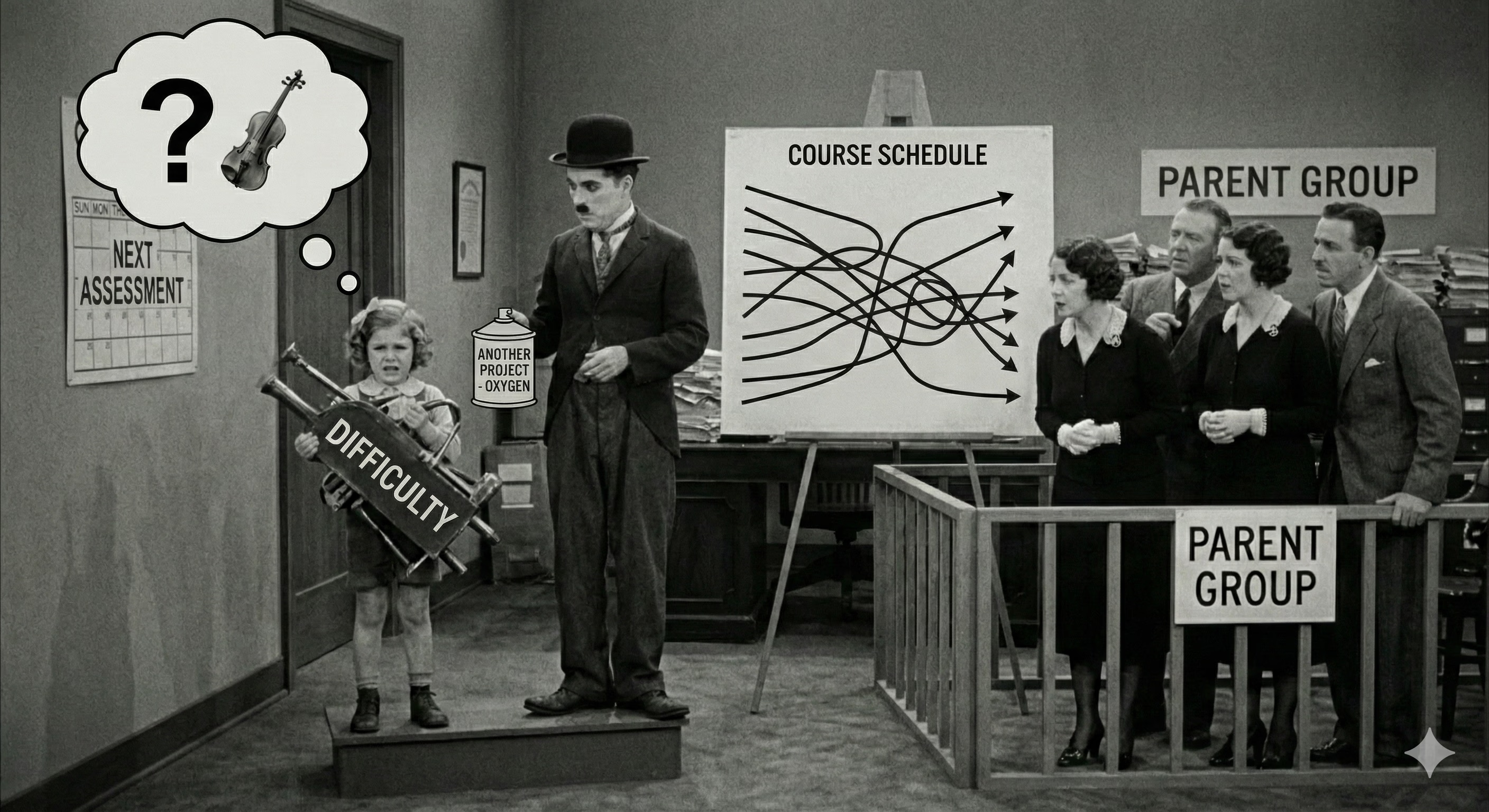
Now we have to get serious—because this group’s behavior depends entirely on a new unstable variable: their child.
Kids are sensitive to fake. They can smell “something’s off.” You can’t directly tell a child: go make your parents enroll in more programs. That’s too much like a line; it breaks the spell.
So we do it more artistically: we make the child generate the demand “spontaneously.”
The spark of interest fears not difficulty, but difficulty with no meaning.
When experiences are chopped into fragments, when feedback becomes on-and-off, the child starts to doubt themselves: Am I not good enough? Am I not suited for this?
That’s when we hand them a canister of oxygen: another program.
More suitable for you, happier, more rewarding, more “custom-made.”
Classic dramatic structure: manufacture a crisis, then sell the antidote.
The antidote, of course, is paid.
And when the parent asks—note carefully, the parent must ask; we never “pitch.” We just nod: your child’s judgment is very accurate. That one really is more suitable. But you can’t drop this one either; you can’t quit whenever it gets hard.
And just like that, one interest gets split into multiple paid side quests.
The Sigma Type

Sigma types are big fish.
When the fish won’t beach itself, you wait.
When it bites, you hold steady.
They’ve done their homework before arriving, so ordinary actors can’t fool them.
They need “someone who knows the trade.” Easy—we place one real expert among twenty storytellers.
This person isn’t happy. They think they’re crawling up the slope of justice, so they endure my theater and talk themselves into, “I’m changing the industry.”
Do you see how perfect this is?
Someone who genuinely believes will provide you with the most expensive commodity: credibility.
When a Sigma parent shows up, I let the “expert” enter, and we tune the lighting to the color temperature of “finally, someone who gets it.”
They’ll naturally slip into scarcity: at last, a fellow traveler.
A Sigma parent’s greatest loneliness isn’t money. It’s “nobody understands.”
If I let them be understood once, they’ll repay that understanding with their wallet.
Don’t they think it’s expensive?”
Of course it’s expensive.
But you must understand: they aren’t buying class. They’re buying an identity.
“I’m one of the few who understands. I’m making the right choice.”
Once identity is established, price becomes ritual.
The pricier the ritual, the steadier the faith.
Climax
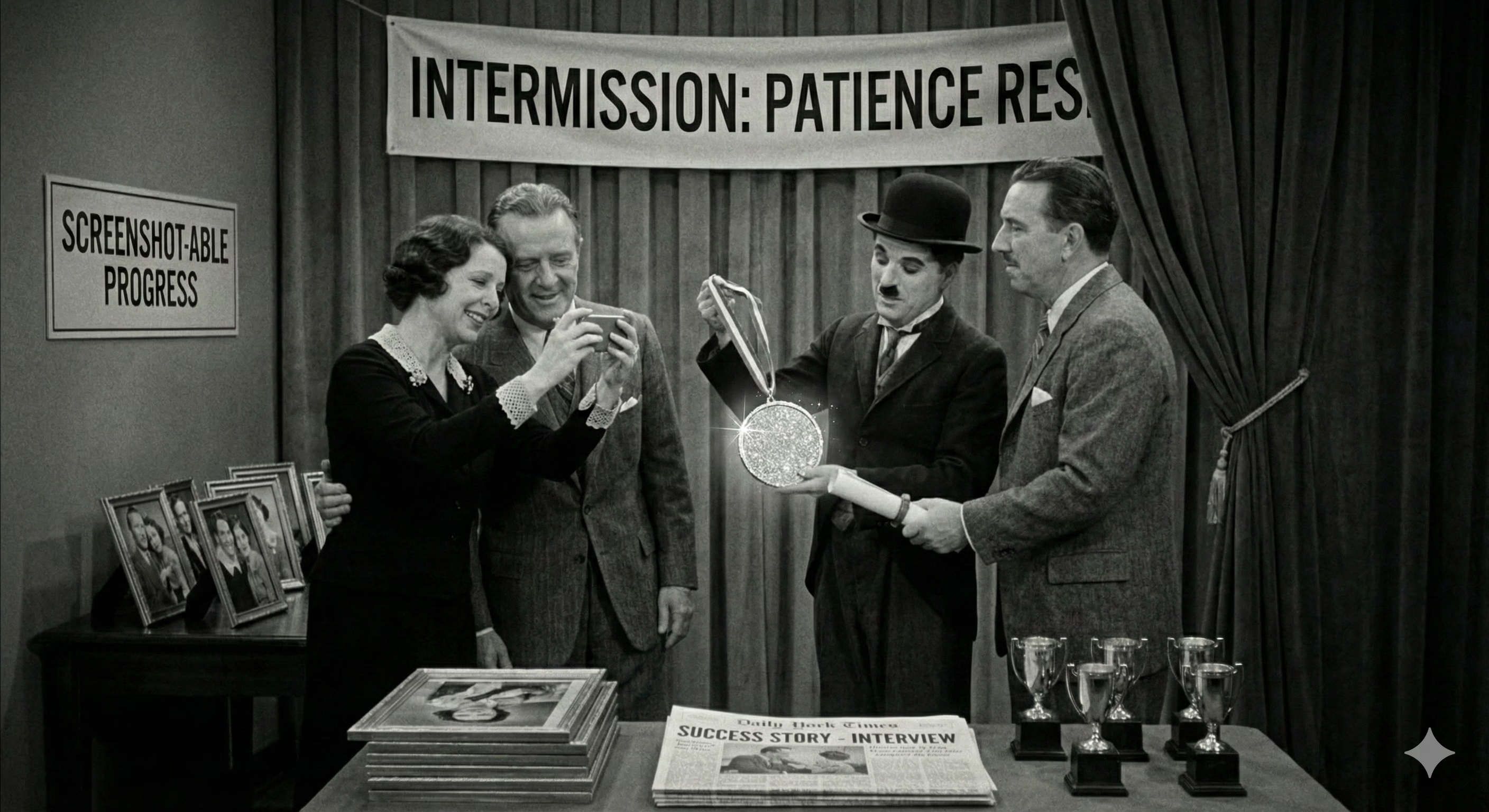
After a certain point, the audience gets tired.
Parents get tired. Kids get tired. Actors get tired.
Fatigue leads to exit. Exit is our mortal enemy.
So we must schedule a mid-show climax.
I call it: Patience Reset.
The goal is simple: before you quit, we give you something displayable—something that repackages sunk cost into hope. It doesn’t have to represent real growth, but it must represent one thing: you can explain at the dinner table where the money went.
Certificates, rankings, medals, group photos, case studies, interview write-ups, Moments posters, Xiaohongshu seeding notes, even a recording of “the teacher praising your child.”
They all share one trait:
Good for photos. Good for reposting. Good for proving you’re not flailing blindly.
Real educational growth is slow, vague, and cannot be screenshotted.
And we, the people of theater, are best at manufacturing screenshot-friendly progress.
You think this is an education company’s capability?
No. This is a theater’s capability.
Curtain Call
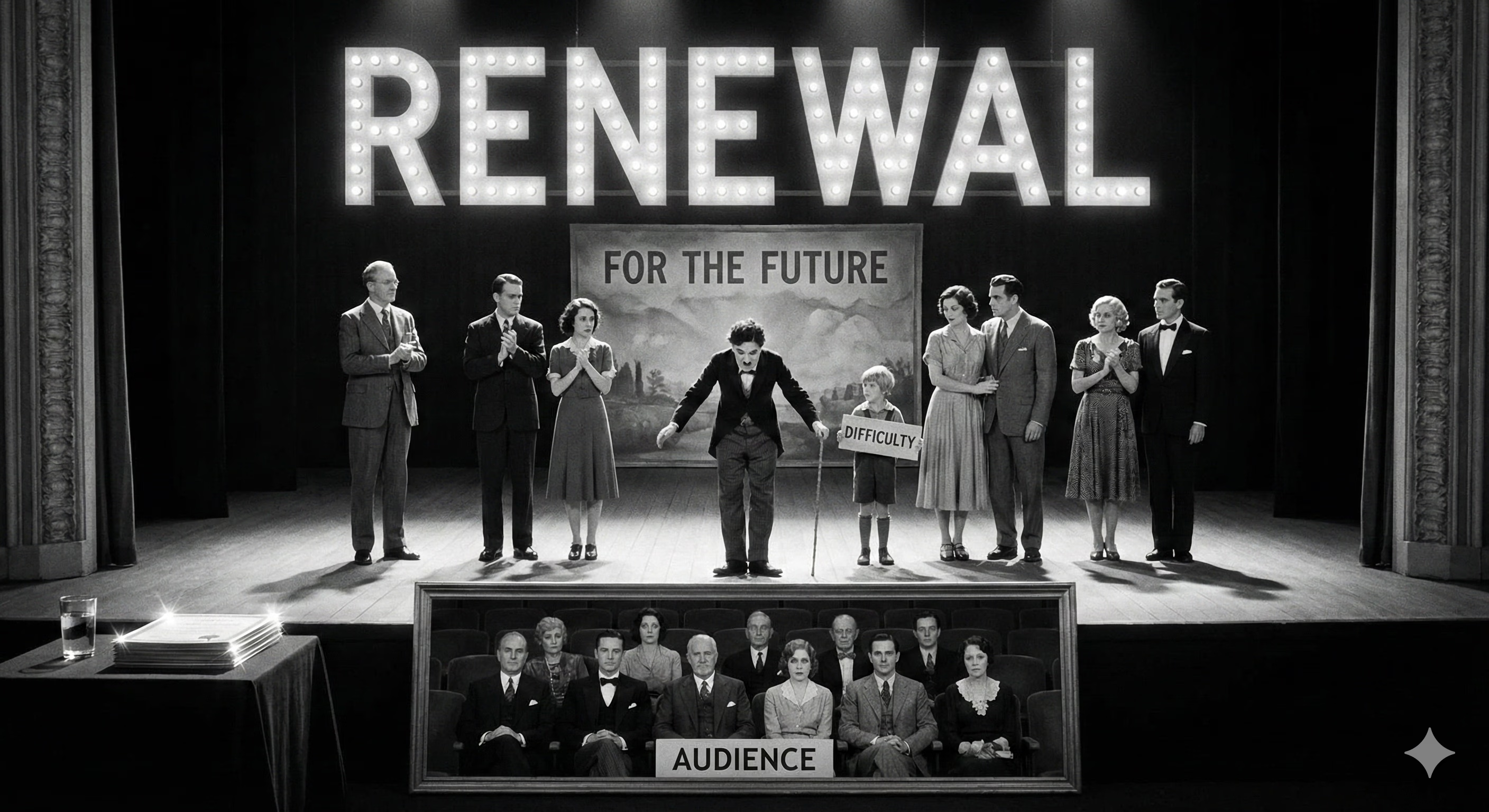
Now I’ll tell you the most important truth: the most beautiful part of this show is—the child was never the protagonist.
Who is the protagonist? Renewal.
The child is a prop: to make the story look kind.
The parent is the engine: converting anxiety into cash flow.
The teacher is the actor: delivering lines like sincerity.
And “education” is the giant backdrop on stage, printed with: For the future.
So what exactly are we investing in?”
You’re investing in a show that can always add encore performances.
This show doesn’t need to truly solve problems—because solving them ends the plot. It only needs to make problems look like they’re being solved.
“Being solved” is the most stable consumption state:
You’re always just a little short of results, and you always have a reason to buy one more time.
Hearing this, you might think: how do I tell whether I’m watching a show? Congratulations—you’ve reached the edge of the stage. When the audience starts doubting the lighting, the lighting switches to a softer color temperature.
Don’t worry. We’re professionals.
The warm water is still hot. The certificates are still bright. The groups are still checking in.
The next act is about to begin.
This is the highest-level magic of China’s education consumption:
Turning your love into installment payments.
Dear investor, you want out?
I would refer you to HERE